

Specialized DCS Appliance Repair in San Francisco
Mon–Sat: 8:00 AM – 7:00 PM
A door that will not close tightly lets warm air in and wears out the cooling system. See how to spot the cause and which checks are safe at home.
A refrigerator that is losing its seal gives itself away in small ways. There is a drizzle of condensation along the edge of the door, frost near the opening, a faint hiss as the door closes, or a unit that runs for long stretches without ever getting cold. On an outdoor refrigerator the effect is worse, because the surrounding air is warmer, humid, and often salty.
Around the edge of the door sits a flexible gasket with a magnetic strip inside. The magnet pulls the gasket against the cabinet frame so no air passes. For that to work, the gasket has to be soft, clean and uncrushed, the door has to hang square, and the cabinet has to sit level. Change any one of those and a gap can open.
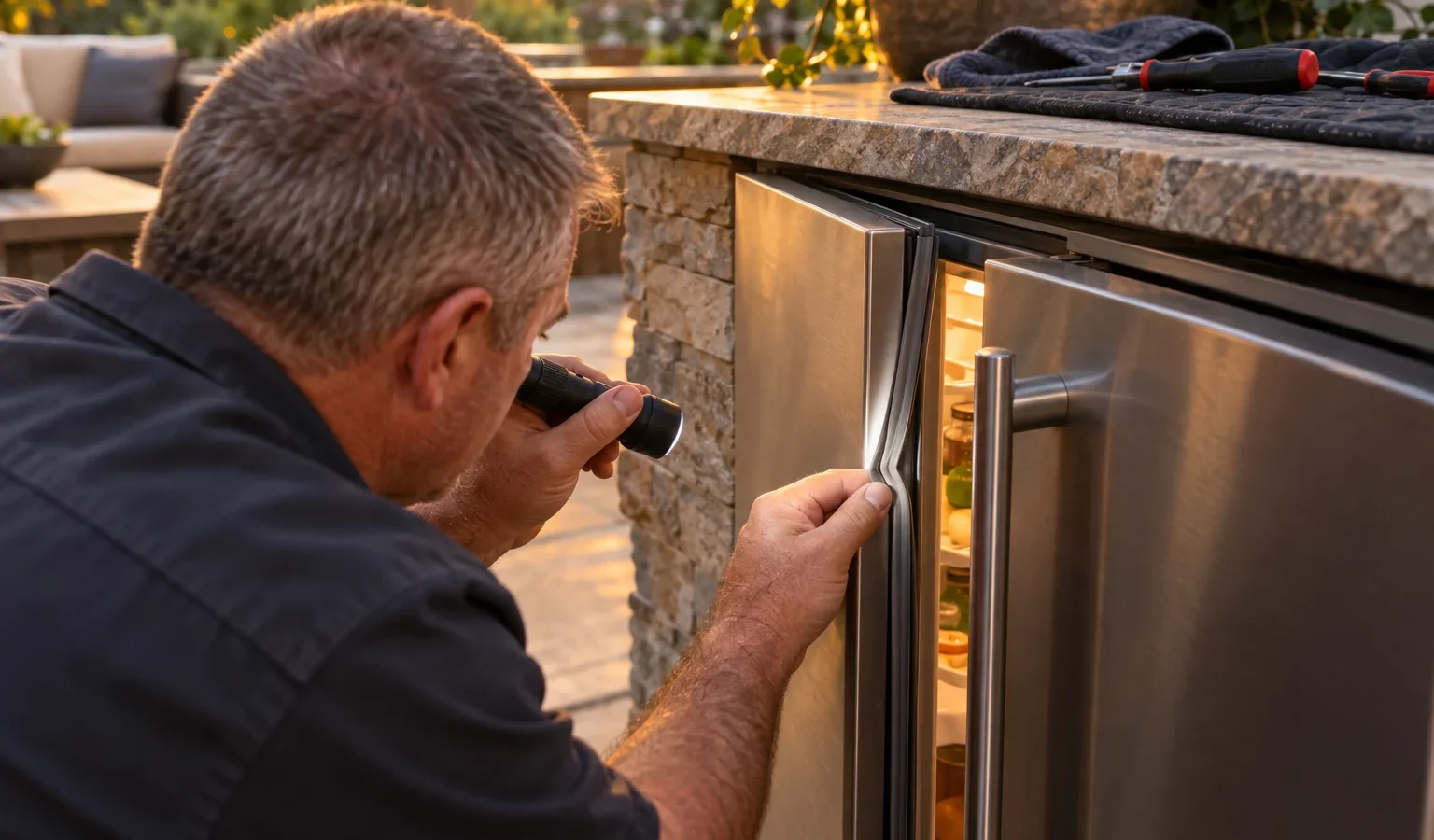
Close the door on a strip of paper at several points around the edge, top, bottom, hinge side and latch side. If the paper slides out easily at one spot, the seal is weak right there. Mark the spot with your finger and look closely.
Do not coat the gasket with oil or petroleum jelly to make it look shiny, since oil can swell the rubber. Do not tighten hinge screws with the door loaded and unsupported, and do not stuff foil or cardboard under the unit as a shim. Never remove interior panels to reach the hinge hardware or any wiring. If the alarm sounds with the door shut, power cycle once at the breaker and see whether it clears.
Bay Area patios mean salt in the air, damp mornings and sudden afternoon sun. The gasket stiffens in dry heat and collects moisture in fog. The hinge hardware on an unsheltered island can corrode. If your refrigerator is in an exposed spot, keep the door closed during cleaning with a hose or pressure washer, and avoid aiming water at the seams.
Gaskets and hinges are specific to the exact model. A hinged refrigerator such as the RF24RE4 (right hinge) differs from the RF24LE4 (left hinge) in its door hardware, and beer dispensers use their own seals. The label is usually inside the cabinet wall or behind the kickplate. Our DCS refrigerators overview shows what is in the family.
The technician measures the gap, inspects the gasket, checks the level and hinge play, and confirms whether the warm air has affected the cooling system. If a gasket must be replaced, you see a written estimate before the work and nothing proceeds without your approval. The DCS refrigerator repair page explains the rest of the process.
Book when cleaning and leveling do not close the gap, when frost keeps forming around the opening, or when the unit runs constantly. If food has been warm for a long time, discard it. For the cooling side of the story, read about a refrigerator not cooling.
A weak seal rarely stays small. Watch for frost forming along the door edge, a puddle of meltwater on the shelf below the opening, ice that keeps coming back after you clear it, and a compressor that no longer pauses between runs. Each is a sign that moist air is entering and being frozen out, which loads the system further. The gasket may look fine from the front, so feel along it too: a stiff, brittle section often hides a crack on the underside.
Wipe the gasket after spills, avoid hanging towels or bags on the door, and do not slam it, since a hard close can shift the hinge. If the unit lives on a deck exposed to rain, keep a rag handy to dry the edge after storms. Level the cabinet again if you notice the island floor has shifted, because even a small tilt changes how the door hangs.
If the gap is in one spot and the gasket looks flat or torn there, suspect the gasket. If the door sags or the gap grows toward one corner, suspect level or hinges.
Gaskets are model-specific and often sit in a channel that needs care. Having one fitted on a visit avoids a poor seal and a damaged door liner.
Warm, humid air entering through a weak seal condenses on cold surfaces. Fix the seal first, then check whether the drain path is clear.
Yes. The compressor runs far longer to keep up, which wears it faster, and food temperatures rise.
No. The alarm tells you the door has been open, not that the seal is faulty. A door that closes poorly can trigger it repeatedly.
Share a few details and we’ll confirm an appointment. Prefer to talk? Call us and we’ll help right away.