

Specialized DCS Appliance Repair in San Francisco
Mon–Sat: 8:00 AM – 7:00 PM
Drinks not as cold as they used to be? Learn what makes a DCS beverage center run warm, which outside checks are safe, and when to book a diagnostic visit.
Few things irritate a host like reaching into the beverage center for a cold drink and finding it merely cool. DCS beverage chillers and outdoor refrigeration are designed to hold a steady interior, so a drift toward warm is a signal, not a quirk. Sometimes the cause is simple and external. Sometimes it points to a fan, a sensor or the sealed system, which an owner should not touch. This article helps you sort which is which.
Start by describing the symptom precisely, because different symptoms lead to different checks.
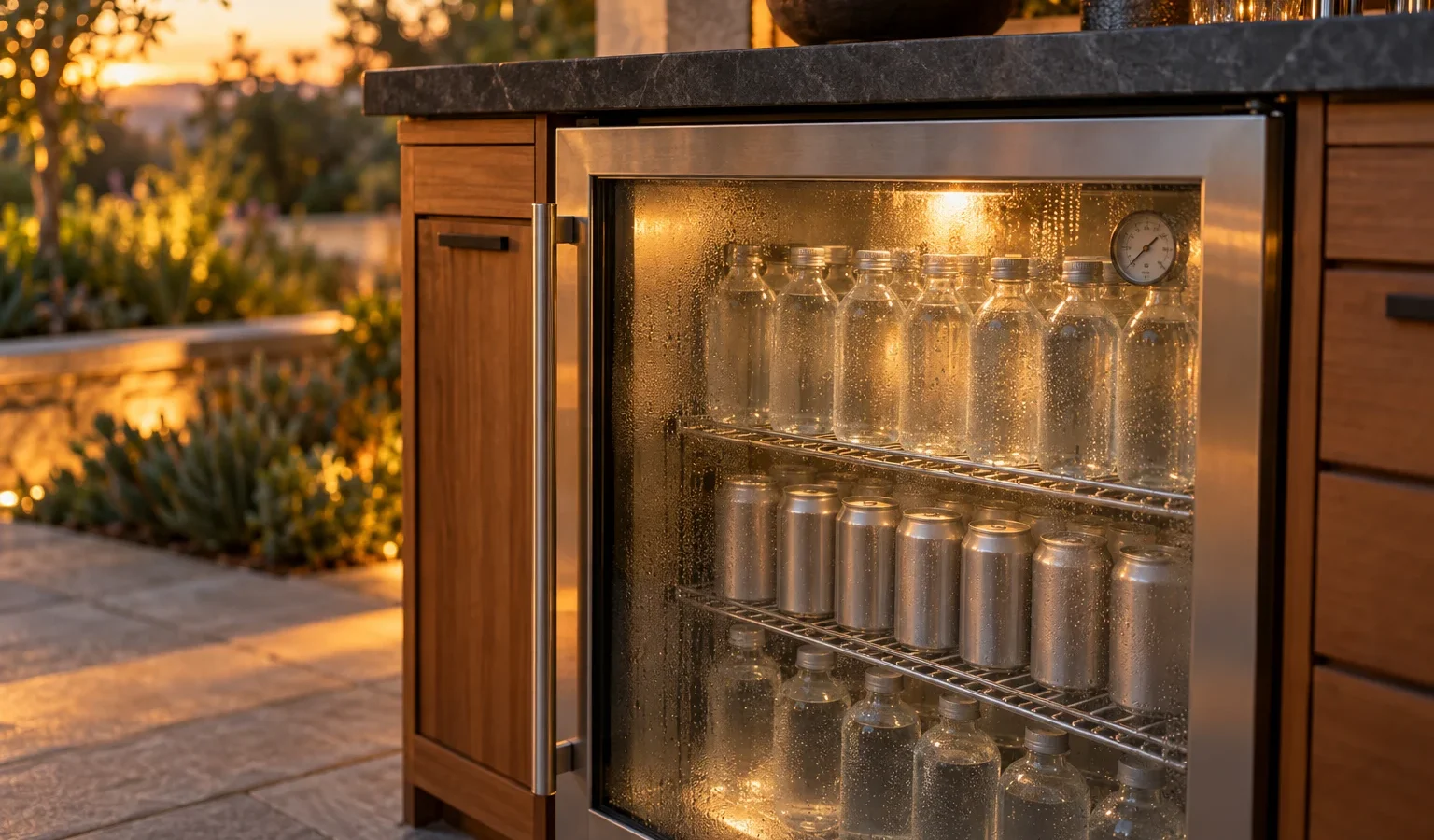
Many DCS chillers live in outdoor kitchens or bars. The lineup includes the BC25 beverage chiller and sink, and 24-inch outdoor refrigeration such as the RF24RE4 refrigerator and the RF24DE4 drawers. Outdoors, a unit fights warmer surroundings, direct sun on a deck, and enclosed island cabinetry that traps heat. A refrigerator built into a tight cut-out without clear ventilation cannot shed heat, so it struggles to cool. On foggy mornings moisture also settles on gaskets and vents, and over time salt air can attack the contacts that supply the fans and controls.
If your chiller has become gradually less cold over weeks, think first about what changed around it: a new cover on the island, a stack of boxes against the grille, cushions near a vent, or a sunny afternoon that now falls on the door.
When the outside checks do not fix it, diagnosis moves inside. A technician examines whether the evaporator fan turns and moves air, whether the condenser area is clean and airy, whether a temperature sensor reports sensible values, whether the defrost system clears frost, and whether the sealed system is actually producing cold. A weak gasket or hinge that let the door sag is also checked. These tests need meters and care around live circuits, which is why they are not owner jobs.
The cause often depends on the model. The RF24 outdoor refrigeration family, the BC25 chiller and the beer dispensers each have their own layout, so knowing the exact number matters. You will usually find the label inside the cabinet wall or behind the kickplate; the model number guide shows where to look.
Book a diagnostic visit if the unit stays warm after the checks above, if it runs without a pause, if frost keeps forming, or if the same code returns. Describe what you saw and give the model number. We diagnose before repairing, provide a written estimate, and do nothing without your approval. The full scope of our work on cabinets, drawers, beer dispensers and chillers is on the DCS refrigerator repair page, and the DCS refrigerators guide lists the lineup. If the chiller sits beside an ice maker that has also slowed down, read about the BC25 beverage chiller and mention both.
It depends on how much you added and how warm it was. If it is still not cold after a long stretch with the door closed, treat that as a fault rather than a recovery delay.
Yes. Outdoor outlets are protected by GFCIs that trip in damp weather. Press reset firmly; if it trips again immediately, stop and call.
A new rattle, scrape or squeal often means a fan or its mount is wearing. It may still cool for now, so book a visit before it stops.
They share the outdoor refrigeration family, but the layouts differ, so the diagnosis path does too. Always give us the exact model.
You can, if it is not smelling or making alarming sounds. Move perishables elsewhere and avoid opening the door more than needed.
Share a few details and we’ll confirm an appointment. Prefer to talk? Call us and we’ll help right away.