

Specialized DCS Appliance Repair in San Francisco
Mon–Sat: 8:00 AM – 7:00 PM
Water left in the bottom of a DCS DishDrawer after the cycle? See what blocks drainage, which checks are safe, and when standing water needs a visit.
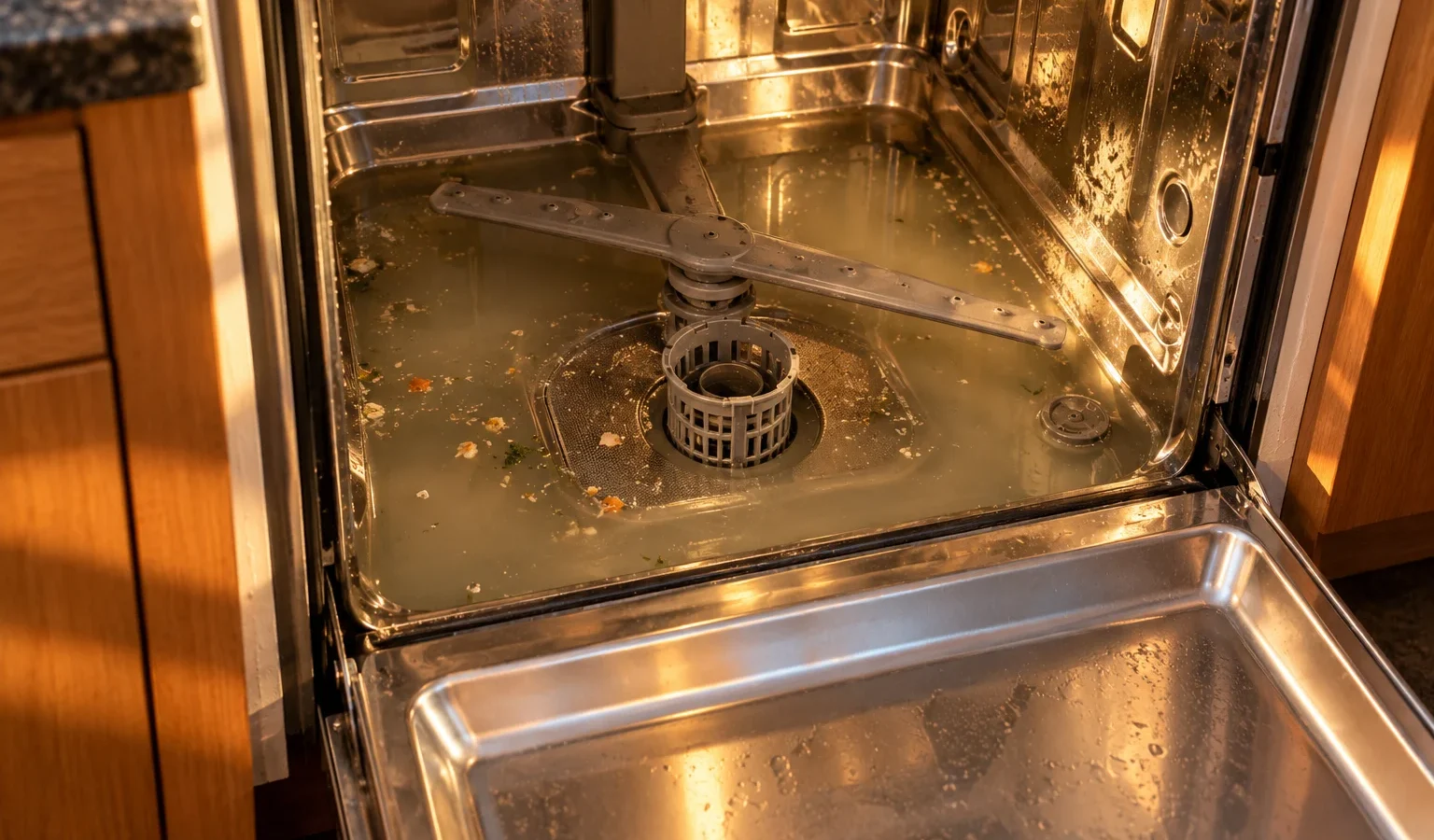
Open the drawer and find a pool of gray water, and the question is the same in every kitchen: where is it stuck? A dishwasher moves water in two directions. The supply side brings clean water in, and the drain side pushes used water out through a pump and hose to your plumbing. A drawer that fills but does not empty has a problem on the drain side, but that side is long, and the blockage can be anywhere along it.
Used water collects in the sump at the bottom of the tub. A pump pushes it through a drain hose, which usually ties into the sink drain or a disposer. A check valve keeps dirty water from running back in. If any link is blocked, kinked or worn, water stays behind. Because the DishDrawer has separate drawers, you may find one drained and the other not, which is a useful clue.
Small bones, fruit stickers, broken glass fragments and paper labels collect around the filter and block the pump inlet. A rinsed, fully seated filter often brings a slow drain back to normal.
If the dishwasher drain feeds a garbage disposer, the knockout plug inside the inlet can remain in place after installation. This blocks the drain from the first day. Even without that plug, a disposer packed with waste backs water up toward the dishwasher. Running the disposer clear, with the dishwasher off, shows whether the sink side is the culprit.
The hose behind the unit can be bent when the cabinet is moved or when items are stored under the sink. Grease and soap scum also narrow it over time. A technician checks this with the unit pulled out; owners should not try to move a connected dishwasher.
Many installations include an air gap or a raised loop in the drain hose to stop sink water from flowing back. These can clog with debris. If an air gap fitting is mounted on the counter, you may see water spit from it when the dishwasher pumps.
A seized or obstructed pump gives you a drawer that hums but does not clear water. A pump or motor problem might also appear as F2, motor problem. The codes cannot tell us which part failed, but they point the search.
If the control does not get a signal it expects, or the board does not command the pump, the drawer sits full. Codes such as F9, electronics malfunction or F8, electrical problem may show.
A sour smell from stagnant water is common and does not itself mean a fault, but a recurring smell alongside repeated standing water suggests a partial clog that never fully clears. Wipe the drawer, the seal and the filter area, and let the unit air out with the drawer ajar when it is empty.
DishDrawers sit in a cut-out where the drain line must have enough slope and no kinks. Kitchen remodels in San Francisco apartments and Bay Area houses sometimes reroute plumbing, and drain runs end up longer or flatter than ideal. If the standing water began soon after a remodel, a plumbing move, or a new disposer, mention that, because the problem may be in the installation rather than the dishwasher itself.
The DD24DCHTX9 and DD24DCTB9 are current DishDrawers in our list, while the DS224 and DW-24SS appear as other models with their own layouts. The model label is usually on the drawer front edge or inside the frame. Knowing it lets us prepare for the right pump and hose arrangement.
Bail out the water, run the sink faucet for a minute, and then run only the drain portion of a cycle if your model offers one, or start a short rinse. Watch and listen. A pump that hums and moves water out in a rush is fine and the blockage was local. A pump that stays silent suggests a control or power problem. A pump that hums but delivers only a trickle points to a hose or inlet clog. Tell us what you heard; it genuinely shortens the diagnosis.
If a clear filter and a free-running sink do not restore draining, book a visit. A repeated problem after a short cycle, a humming pump with no flow, or any code deserves attention. We diagnose first, give a written estimate and wait for your approval. Our DCS dishwasher repair service page lists what we handle, and the DCS dishwasher drawers guide shows the lineup. If leaks also appear, read about a leaking DishDrawer.
Each drawer has its own tub and pump path. A blockage in one drain path does not affect the other, so the affected drawer is where to focus.
Not immediately, but it breeds odor and can hide a failing pump. Do not leave it for weeks.
Yes, quite often. A disposer clogged with waste or still holding its plug stops the dishwasher from emptying.
If the sink is slow too, start with the plumbing. If the sink drains freely and the dishwasher does not, book a diagnostic visit.
Not necessarily. Codes point to an area. The diagnosis confirms which part is at fault.
Share a few details and we’ll confirm an appointment. Prefer to talk? Call us and we’ll help right away.