

Specialized DCS Appliance Repair in San Francisco
Mon–Sat: 8:00 AM – 7:00 PM
A downdraft vent that stays flat or rises only partway stops pulling smoke at the cooktop. See the causes, safe checks, and when to book a visit.
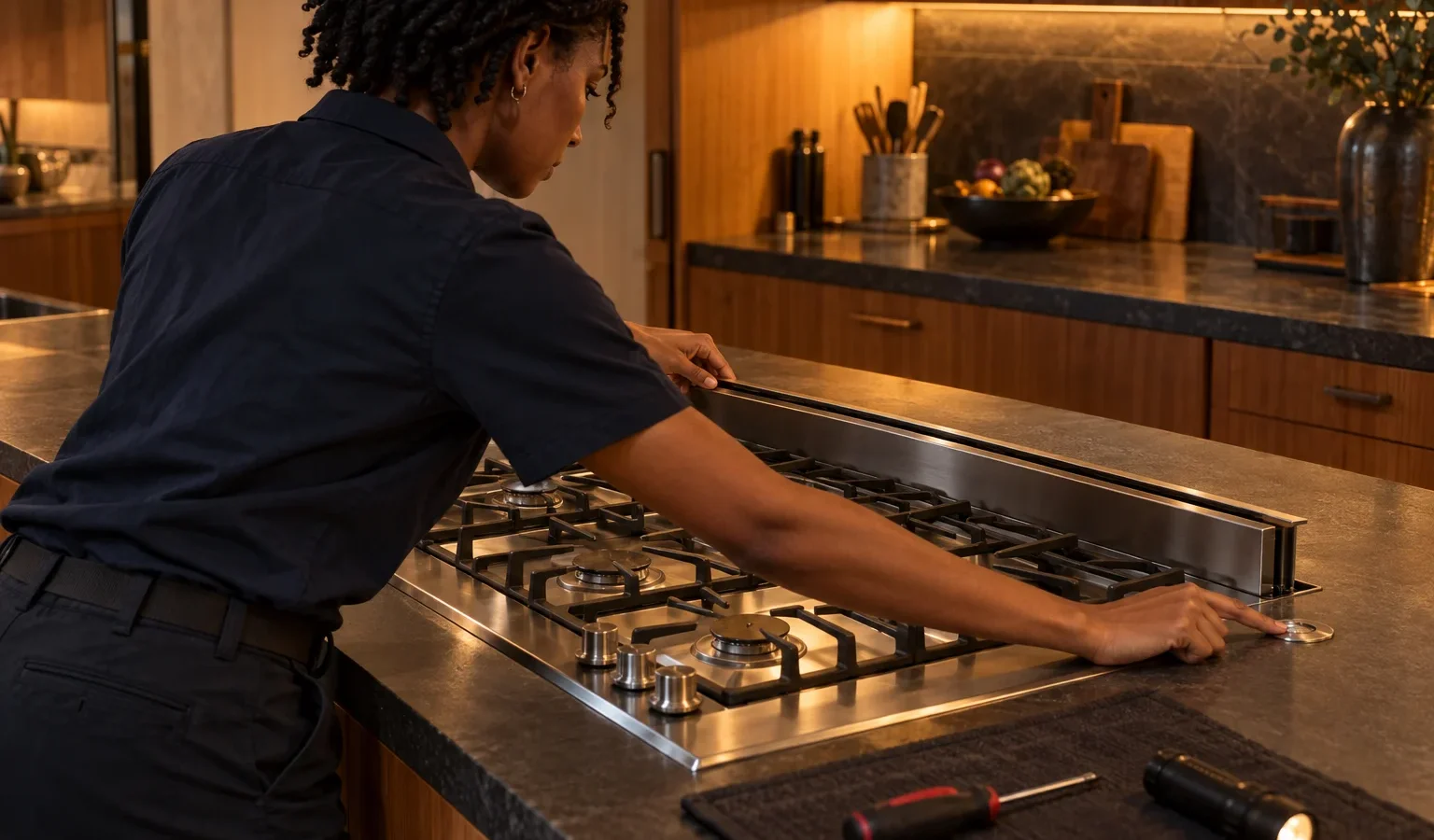
A downdraft vent sits flush behind or beside the cooktop and rises when you need it. When it stays down, you lose the smoke capture you installed it for. The list of DCS downdraft models in our lineup includes the DD-30SS and DD-36SS, both discontinued, and the HD30 downdraft vent hood. Their lift and blower systems share general principles, even if each model’s details differ, and that is what this article walks through.
A downdraft has a vent assembly that slides up from the countertop. A motor and drive move it along guides. A control, either on the panel or a switch, tells it to rise, and the blower then pulls air down through the vent to a duct. Anything that interferes with the motion, the command, the power or the ducting changes how it behaves.
The slot where the vent slides is a trap for crumbs, spilled liquid and grease. Over time a sticky film makes the motion slow, and a piece of foil, a spoon or a cap can stop it altogether. Check the opening when the vent is down and the cooktop is cool.
A tall pot, a cutting board or a cooktop accessory sitting against the vent will stop it rising. It sounds trivial, but it is the most frequent culprit.
If the vent does nothing, check the breaker or switch that supplies it. A control that has lost power or a button that no longer registers can leave it stuck.
If you hear the motor but see no lift, the drive may have slipped or a part in the mechanism may have broken. A technician needs access to the cabinet below to check.
When the vent rises but pulls weakly, the blower, the ducting or a clogged filter may be to blame. A disconnected or crushed duct in the cabinet reduces capture, even if the lift is fine. Our related article on a hood not pulling smoke covers the capture side.
Downdrafts typically sit in islands or peninsulas, and their ducts run through the cabinet and floor or a wall. In Bay Area homes with crawlspaces or slab floors, long duct runs and makeup air shortages are common. A duct that has been dented by stored items in the cabinet can restrict flow. Items stacked in the base cabinet can also press on the lift mechanism.
If you notice a burning smell from the vent, switch off power at the breaker and leave it off.
The DD-30SS, DD-36SS and HD30 may use different lift designs, and parts are not interchangeable. We use the model to predict what we will find. You can see the model pages for the DD-30SS and the HD30. For the discontinued units, parts availability is part of the diagnosis and is explained in the written estimate.
Until the vent works, cook with the lid on pots when possible, open a nearby window, and use the lower burner settings that make less smoke. Keep a lid or sheet pan within reach for grease flare-ups. Avoid searing or frying at the cooktop, and move those tasks to a grill outside if the weather allows. Smoke detectors tend to react faster when capture is missing, so keep the area clear and be ready to switch off the burner. These steps are stopgaps, not a repair, and they help you avoid grease build-up on cabinets and walls.
If clearing the track and resetting power does not help, or you hear a motor without movement, book a visit. We diagnose first, provide a written estimate, and wait for your approval before repair. Our DCS ventilation hood repair page covers downdrafts and hoods, and the DCS ventilation hoods guide describes the lineup.
Not by itself, but you lose smoke and grease capture. Use another ventilation source while you wait.
Do not force it. Forcing can damage the guides. A technician can release it properly.
The blower, filters or ducting may be the issue. Clean the filters first, then book if airflow stays weak.
No. We diagnose and quote what is possible, including parts availability, before anything is done.
If you see one, write it down. We only list code meanings we can verify, so we will check it against the model.
Share a few details and we’ll confirm an appointment. Prefer to talk? Call us and we’ll help right away.