

Specialized DCS Appliance Repair in San Francisco
Mon–Sat: 8:00 AM – 7:00 PM
If the side burner clicks but stays dark, propane, moisture or a dirty burner port are the usual reasons. Learn the safe checks and what never to try.
A side burner is the workhorse of an outdoor kitchen: it boils pasta water, simmers sauces and keeps a pot going while the grill does its job. When it clicks and nothing lights, the instinct is to keep pressing the igniter. Resist that. Repeated attempts can fill the burner box with gas, and the checks below help you find the cause safely.
If you smell gas, turn the knob off, close the propane tank valve if it is safe to do so, step away, and call the gas utility or 911 from outside. Do not light anything. Never use a match near a burner that did not light, and never try to light the burner with the lid closed. Wait several minutes with the lid up and knobs off for any gas to clear before another try.
Propane tank trouble. The tank may be empty, the valve may be closed, or the safety device on the tank valve may have tripped. Open the valve slowly rather than fully at once.
Moisture. Fog, morning dew and winter rain wet the igniter electrode and the burner ports. A damp igniter sparks to the wrong place.
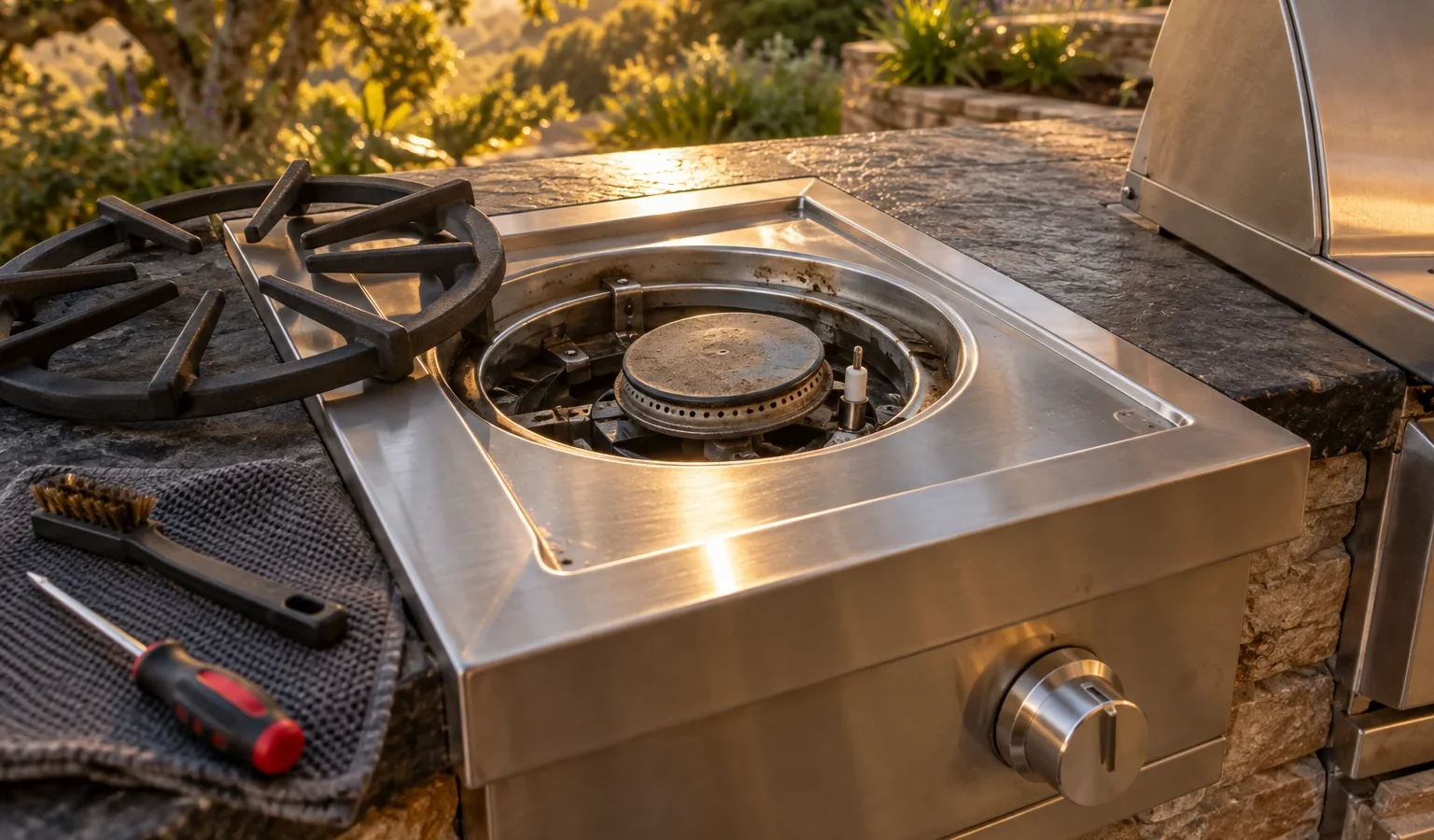
Dirty burner and ports. Grease, sauce overflow and insects can block the small gas ports or the venturi tube that mixes air and gas.
Dead igniter battery or loose wire. Many outdoor igniters run on a battery; salt air can corrode the contacts.
Misaligned burner. If the burner head has slipped, the spark does not reach the gas.
Wind. Rooftop and hillside decks see gusts that blow the flame out before it establishes.
Do not touch the regulator, hose fittings or valves with tools. Do not spray water or cleaner into the control area, and do not use a lighter or match if the electronic igniter fails. Do not bypass safety valves. If the hose looks cracked, or the burner area has been scorched, leave it unused.
A built-in side burner sits in an island cut-out and needs fresh air and a clear path to vent. A burner box that is sealed too tightly in stone starves the flame. LPG and natural gas units use different orifices, so a burner converted without the correct parts will not light reliably. The label tells the technician which one you have.
The lineup includes the double burner BGC132-BI-L, the griddle and side burner GDSBE1-302-L and the power burner PBE1-24-L. The label is usually near the control panel or the firebox and drip tray area. See the DCS side burners and griddles guide.
A technician checks the gas supply, the igniter, the burner ports and the flame pattern. After diagnosis you receive a written estimate and nothing is repaired without your approval. Our DCS side burner and griddle repair page covers the process. If your main grill also fails to light, read grill won’t ignite.
Once a month during heavy use, and after any boil-over, let the burner cool, close the gas, and lift off the cap and head as the manual shows. Wash them in warm soapy water, rinse and dry them fully, and clear the ports with a soft brush. Reassemble carefully, making sure the pieces seat flat. Never use harsh sprays on the electrode, and keep water out of the control area.
A fitted cover keeps fog and rain off the burner when it is idle. In windy spots, a low screen or a rearranged cooking spot helps the flame stay lit. Store spare igniter batteries somewhere dry, since salty air degrades them quickly.
Think about what changed since the last good use. A fresh tank, a storm, a cover left off, a boil-over, or a recent cleaning with water are all common triggers. A burner that stopped working right after cleaning is almost always wet or reassembled slightly off. Let it dry thoroughly in dry air and reseat the parts before assuming a part has failed.
Stop trying if you smell gas, if the hose or fittings look damaged, if the burner lights with a roaring or uneven flame, or if the igniter keeps clicking with no result after the checks above. A burner that will not light is an inconvenience; a burner that behaves unpredictably is a safety question, and it should be diagnosed before further use.
Gas may not be reaching the burner, the spark may be weak or wet, or the ports may be blocked. Check the tank valve and dry the electrode first.
No. Repeated tries can let gas collect. Turn the knob off, wait with the lid open, and then try once more.
Yes. Gusts on decks and rooftops blow out a small flame or stop it from catching.
If you smell gas or plan to clean the burner, close the tank valve first.
It corrodes battery contacts and electrode hardware over time, which weakens the spark.
Share a few details and we’ll confirm an appointment. Prefer to talk? Call us and we’ll help right away.