

Specialized DCS Appliance Repair in San Francisco
Mon–Sat: 8:00 AM – 7:00 PM
Not every failing appliance needs replacing. These decision factors help you weigh repair against replacement for DCS grills, refrigerators, ranges and ovens.
When a professional-grade appliance fails, the first reaction is often to start shopping. Sometimes that is right. Often it is not. DCS appliances are built into islands, cabinets and cut-outs that took real effort to design, and replacing them can mean reworking the surrounding stonework, gas and electrical connections. The better question is what the failure tells you.
You cannot make a sound decision without knowing what failed. A burner that will not light might be a wet igniter or a corroded valve. A warm refrigerator might be a fan or a failed sealed system. Those are very different outcomes. A diagnosis first, followed by a written estimate, lets you see the real picture before committing to anything. Nothing is repaired without your approval, so the diagnosis itself is not a commitment.
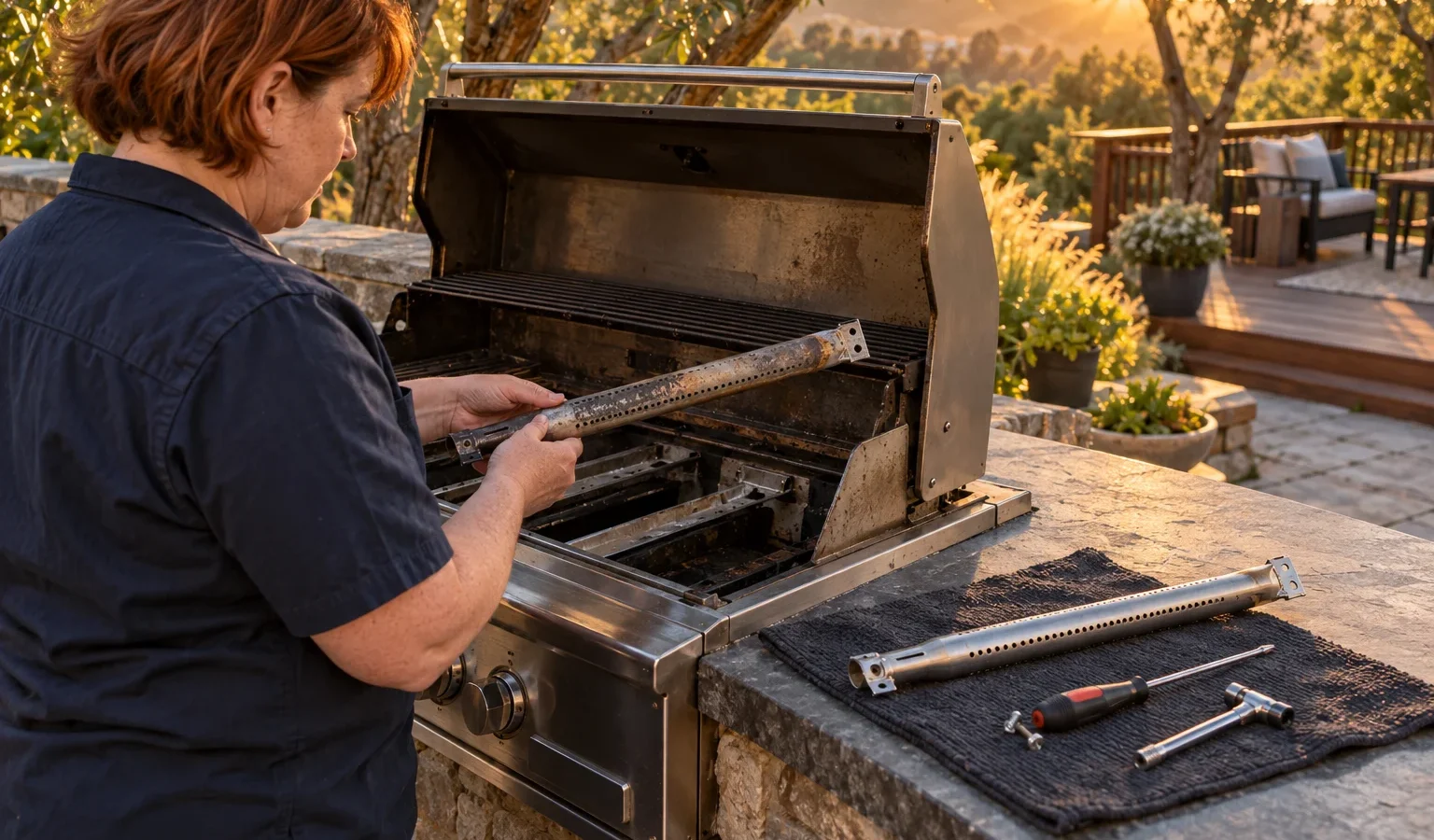
An outdoor grill that fails to ignite is usually a repair case; see our DCS outdoor grill repair page. A refrigerator needs a closer look at whether the issue is airflow, a fan or the sealed system, and the DCS refrigerator repair page explains the process. A professional range is both a cooking tool and a design centerpiece, and repair often wins unless the damage is serious, as covered at DCS range repair. Wall ovens with a control or door fault are typically repairable; see DCS wall oven repair.
Do not disassemble a gas appliance to judge its condition, and do not keep running something that smells of gas or burning. If you suspect a gas leak, leave the area and call the gas utility from outside. Do not buy a replacement before confirming dimensions, fuel type and connection points; many are lost through hurried purchases.
Whichever way you lean, the exact model number is the first fact you need. If you are not sure where to find it, read how to find the model number in our model number guide. For a sense of the range of products we work on, browse the appliances section.
We diagnose the appliance, explain what failed and what it takes to fix, and provide a written estimate. You then decide. Some owners repair, some replace, and some choose to repair now and plan a replacement later. Any of those is a reasonable path when it is based on facts.
Decisions made in a hurry tend to be poor ones. If a cookout is coming or guests are arriving, arrange a stopgap, such as a cooler for a failed refrigerator or a portable burner, rather than buying in a panic. A short wait for a proper diagnosis nearly always leads to a better choice than a rushed purchase.
If you manage rental units, apply the same logic with an eye on tenants and downtime: a repair that restores service quickly may beat a replacement that needs lead time and installation. Keep the model numbers of installed appliances on file, so each decision starts with real information.
Write down the facts: the exact model, what failed, how often it has failed before, and what any replacement would involve. If the fault is a wear part and the unit is otherwise sound, repair is usually sensible. If safety is in doubt, the failure keeps repeating, or parts are unobtainable, replacement deserves serious thought. When the picture is mixed, a diagnosis visit gives you what you need to choose without pressure, and you are never obliged to approve work.
Picture a built-in refrigerator drawer that stops cooling because a fan failed. The drawer is sound, the cut-out is custom, and the part is routine, so repair is the natural choice. Now picture a grill whose firebox has rusted through near the gas parts: here the structure itself is failing and replacement deserves attention. Most real cases fall between those two, which is why the facts matter more than any rule of thumb.
Not by itself. What matters is the fault, the availability of parts and the condition of the rest of the unit.
Yes. The diagnosis comes first, then a written estimate, and nothing proceeds without your approval.
A discontinued model can often still be repaired, though parts availability varies. Give us the exact model number and we will check.
Light surface corrosion is common near the coast. Deep rust in the firebox or gas parts is a safety concern and may favor replacement.
Often yes, because a built-in appliance sits in a custom cut-out and replacement can mean extra construction work.
Share a few details and we’ll confirm an appointment. Prefer to talk? Call us and we’ll help right away.