DCS Professional Ranges
Professional DCS gas and dual-fuel ranges: how to read RGS, RGT, RDS and RDV2 model names, where the label sits and what…

Specialized DCS Appliance Repair in San Francisco
Mon–Sat: 8:00 AM – 7:00 PM
Professional gas and dual-fuel ranges diagnosed first, repaired only with your approval.
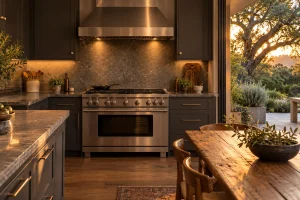
A professional range is the heart of a serious kitchen, and it is also an appliance where small faults matter: a burner that will not catch, a flame that lifts, an oven that runs off its setting. We diagnose and repair DCS gas and dual-fuel ranges in San Francisco and around the Bay Area, in condos, hillside houses and larger homes where the range is the centerpiece of the room.
Each sealed burner has its own igniter. When one burner will not light, the usual suspects are a cap that is not seated, a clogged port, a wet or dirty igniter or a worn spark module. When all the burners click and none light, or the clicking will not stop after the flame is on, a switch, a module or moisture under the cooktop is more likely. Our articles on a range burner not igniting and on continuous clicking cover what to notice before you call.
A yellow, lazy or lifting flame, or a burner that runs low on its highest setting, points at the air mixture, a partly blocked orifice or an issue with gas supply to the range. We check burner components first, because they are the simplest cause to rule out, and we work toward the supply side only after that.
On a gas oven the main question is whether the bake igniter is glowing and, if it is, whether it draws enough to open the gas valve. A weak igniter that glows but never lets the flame start is a classic failure. On dual-fuel ranges the oven is electric, so we test the elements, the sensor and the relay on the control board. A temperature that is consistently off usually means a sensor that has drifted or a door gasket that is leaking heat.
A convection fan that rattles, scrapes or stays silent; an oven light that is out; knobs that feel loose or a clock that resets after small power dips. These are usually modest repairs, but they are easier to sort out with the model in hand.
A door that droops, will not close flush or refuses to lock for a self-clean means a hinge, a spring or a latch needs attention. A door that does not seal lets heat escape and confuses the oven sensor.
Ranges in the lineup are either all-gas or dual-fuel, with gas burners on top and an electric oven. The two behave differently when they fail, and the checks differ. A range that runs on natural gas can be converted to propane, and a converted range that was never fully set up for the new fuel will show weak or noisy flames, burners that pop or ignition that is hard to start. If you recently moved, remodeled or had a gas line changed, tell us. We will look at the conversion and the regulator before we blame the burners.
Many Bay Area kitchens have a range tucked into a narrow cut-out between cabinets, sometimes in a tight apartment or an older house with a modest gas line. We look at the clearance on both sides, the back wall and the way the unit is leveled. A range that is out of level can burn unevenly, and one pushed back against the wall can pinch a flexible gas connector. Make-up air matters when a strong hood runs above a professional range: if the kitchen cannot draw replacement air, burners can flicker or lift. We check the hood, the openings in the room and the venting path as part of a visit when the symptoms suggest it.
Electrical details count too. A dual-fuel range needs a proper supply for the oven, and a loose or overheated connection at the terminal block can explain a range that works for a while and then stops. Our hood repair service handles the ventilation side if the hood turns out to be part of the picture.
Diagnosis comes first, repair second, and nothing is replaced without your approval.
Do not remove the cooktop, take the back panel off or touch gas fittings.
If you smell gas, leave the house, switch nothing on or off, and call the gas utility or 911 from outside. Also stop using the range if a flame appears outside the burner area, if a burner stays lit when the knob is off, if the oven door glass cracks or if you see sparks or smell burning plastic near the wiring. For electrical smells, turn the range off at the breaker.
Our DCS range guide lays out the series. The label is usually on the oven frame, behind the door, or on the side edge of the cooktop frame. We see dual-fuel ranges such as the RDT-305 and the RDS-305 (no longer sold new), gas ranges including the RGSC-305BK, a 30-inch gas range, and the RGT-305, along with Professional V2 units like the RDV2-304. Knowing the exact model tells us which igniter, spark module and sensor to bring.
If the issue is only on the cooktop surface of a built-in unit, our cooktop repair page may fit your setup better.
You tell us the symptom and the model if you can. We confirm a window, arrive, and test before anything is opened. If a part is needed we put it in a written estimate. You decide, and we only proceed when you say yes.
Rarely. If the others burn normally, the issue is almost always in that burner’s head, cap or orifice, often a clog from boil-over.
Moisture or food debris near the igniter can keep it sparking, and a stuck switch can do the same. It is worth checking early, since the sparking wears the module.
Yes, with the correct conversion parts and a proper setup of the regulator and orifices. Tell us if your range was ever converted so we can check it.
Yes. We work on ranges that are no longer sold new, and we will tell you plainly what we find before any repair begins.
Check that the range is level and the racks are positioned evenly. If it persists, a sensor or the door seal is the likely cause.
Professional DCS gas and dual-fuel ranges: how to read RGS, RGT, RDS and RDV2 model names, where the label sits and what…
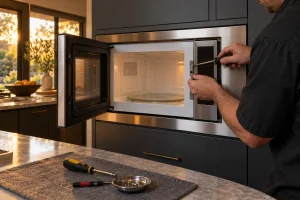
DCS built-in and convection microwave ovens that run without heating, show sensor messages or will not latch, diagnosed safely from the opening…
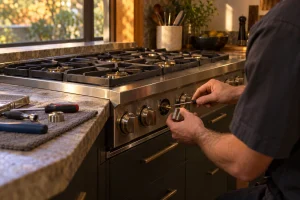
A burner that will not spark, clicks nonstop or burns with a ragged flame deserves a proper look. We repair DCS gas…
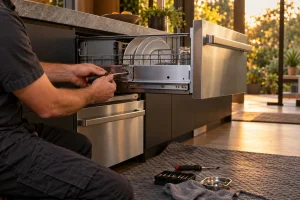
Drain, leak, lid and fill faults on DCS DishDrawer units and the 24-inch dishwasher, diagnosed before repair, with a written estimate for…
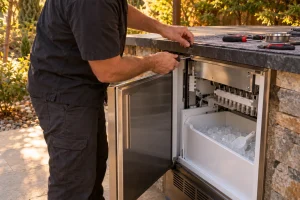
Repair for DCS outdoor ice makers in San Francisco and the Bay Area: no ice, slow ice, flashing lights and water line…
Share a few details and we’ll confirm an appointment. Prefer to talk? Call us and we’ll help right away.