

Specialized DCS Appliance Repair in San Francisco
Mon–Sat: 8:00 AM – 7:00 PM
When the knob is on high but the flames stay small, the cause is usually gas flow, a tripped safety device or blocked burners. Here is a calm, safe check list.
A grill that cannot reach temperature turns a cookout into a waiting game. The flames are short and blue, the hood barely warms, and the steaks take forever. The pattern is common on propane grills, and the most frequent cause is a safety feature doing exactly what it was built to do.
Propane tanks have a safety device that restricts flow if gas is released too quickly, such as when you open the valve all the way with the knobs on. The grill then receives only a trickle of gas. The flames look low even at full setting, and the grill cannot get hot. This is the number one reason for the symptom on a grill that was working earlier.
If you smell gas at any step, stop, close the tank valve, leave the area and call the gas utility from outside.
Never check for leaks with a flame. Do not adjust the regulator, tighten fittings with tools, or remove the control panel to reach valves. Do not poke burner ports with a sharp wire that could enlarge them. Never light the grill with the lid closed. If the flames turn yellow and sooty or you smell gas, turn everything off.
A built-in grill sits in an island whose ventilation openings must stay clear; blocked vents starve the grill of air and distort the flame. Natural gas and propane grills use different orifices, so a converted unit must use the right parts. Fog and salt air near the ocean and the Bay corrode regulators and valve fittings over time, which is why seaside grills develop flow problems sooner.
Examples in the lineup include the Series 9 BE1-36C-L and the Series 7 BH1-48-L. The label is usually under the control panel or on the firebox and drip tray area. Our DCS outdoor grills guide explains the lineup.
Book if the reset and cleaning do not help, if only one burner is weak, or if the regulator or hose looks worn. The technician checks the supply, regulator, burners and flame pattern, then provides a written estimate; nothing is repaired without your approval. Learn more at DCS outdoor grill repair. For related problems see grill heating unevenly.
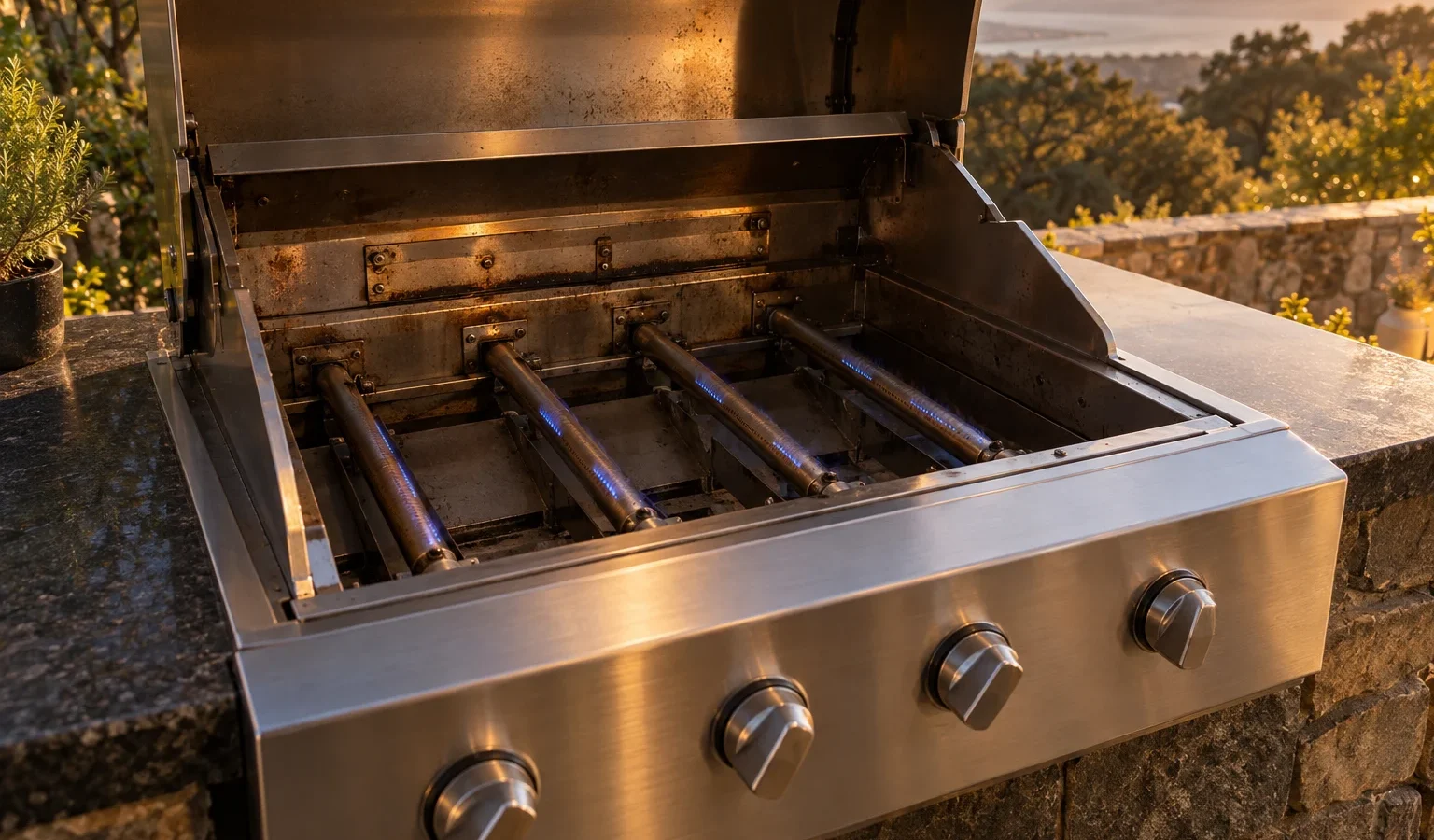
A healthy burner shows an even row of mostly blue flames. Short, weak flames that barely lift off the burner suggest low pressure. Long yellow flames with soot suggest too little air, often from a blocked tube. Flames that are strong at one end and weak at the other point to partial blockage. Take a photo with the lid open, which makes it easier to explain.
Before the season starts, inspect the hose, clean the burners and test each one. After storms, check for debris in the firebox and webs in the tubes. A cover keeps the grill cleaner, but let it cool before covering so moisture does not get trapped inside.
When a single burner is weak while the others burn well, the supply is fine and the problem is local to that burner: blocked ports, a web in its tube, or a misplaced burner head. Take care to compare the flame at all burners before drawing conclusions. If every burner is low, look first at the tank, regulator and hose.
Always do this with the lid open and the area clear of anything flammable.
If you smell gas, see a damaged hose, notice flames escaping from the control panel or under the grill, or the flame stays weak after the reset and cleaning, shut off the tank valve and stop. Weak flame is not dangerous by itself, but the causes behind it can be, and a technician can check the supply and regulator properly.
The most common reason is a tank safety device that limited the flow. Close the valve, wait, and reopen it slowly.
Yes. Pressure falls as the tank empties, so flames shrink before the fuel runs out. Try a full tank.
Yes. Webs and nests in the burner tubes block the mix of air and gas, giving a weak yellow flame.
Strong gusts flatten flames and take heat away, particularly on hillside and rooftop decks.
No. Regulators and fittings are gas components; leave adjustment to a technician.
Share a few details and we’ll confirm an appointment. Prefer to talk? Call us and we’ll help right away.