

Specialized DCS Appliance Repair in San Francisco
Mon–Sat: 8:00 AM – 7:00 PM
Warm drinks in an outdoor DCS refrigerator often trace back to heat, airflow or a door that is not sealing. Here are the checks that make sense before you call.
A drink pulled from the outdoor refrigerator at the start of a gathering feels merely cool, and a few hours later it is not cool at all. The unit may sound as if it is running, and the display may show nothing unusual. Outdoor refrigerators are asked to hold a steady temperature while sitting in conditions that no kitchen appliance faces: a sunlit deck, an island cabinet that traps heat, and damp coastal air. The list below puts the most likely reasons in the order we usually check them.
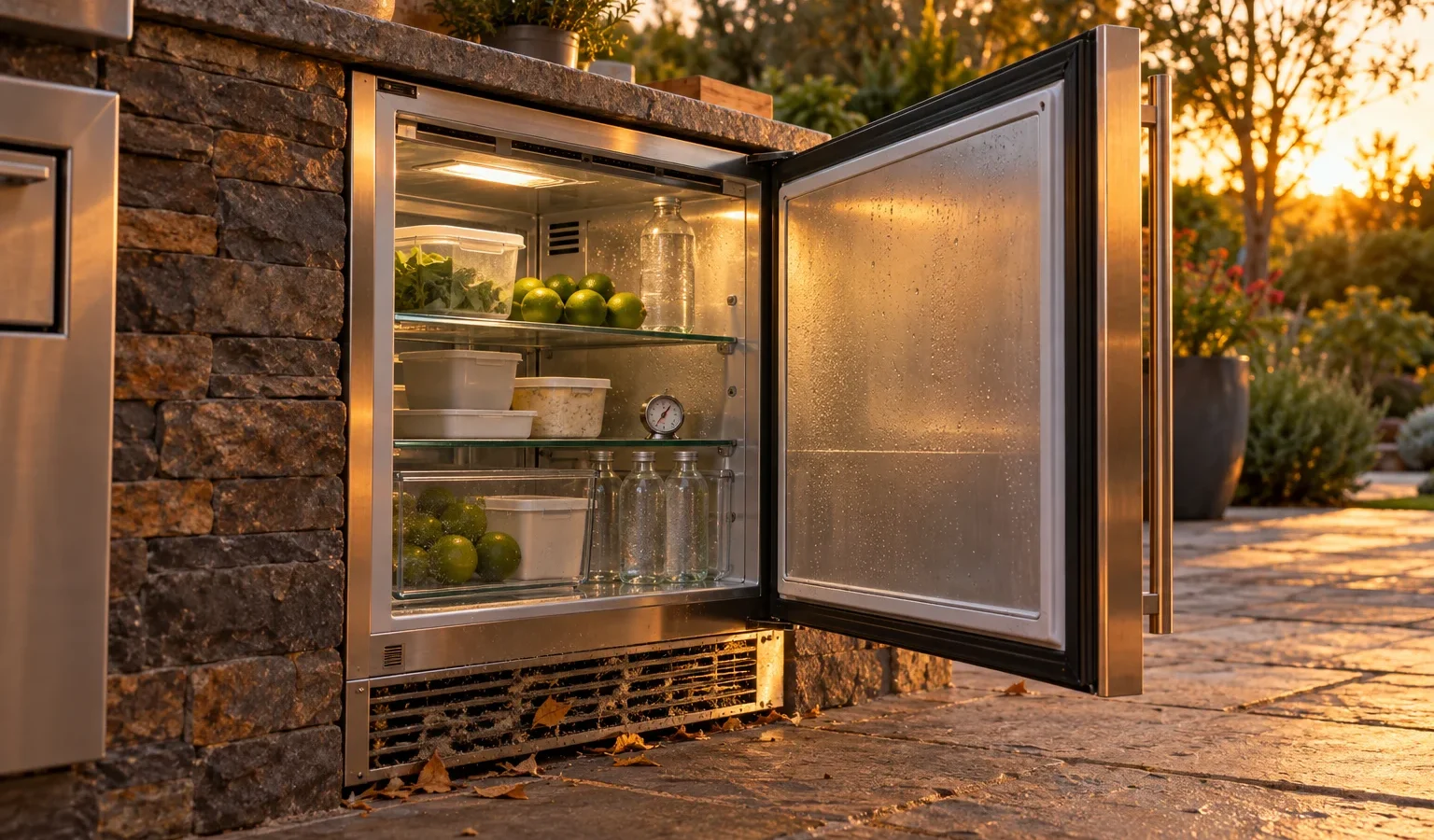
A door that does not close firmly lets warm, humid air in all day. Look at whether something is holding it ajar, such as a bottle at the edge of a shelf or a drawer that rides up on a stack of cans. Run your hand along the gasket. A seal that is dirty, dry, folded or torn will leak air. Wipe it with warm water and a soft cloth. Overstocking can also block the internal airflow and leave warm spots, so loosen the packing and keep air space around vents.
The earlier outdoor refrigerator generation includes a door-ajar alarm, and that alarm stops when the door is closed. See the notes on the door ajar alarm. A high-temperature alarm also exists for that generation, described under the Hi alarm. If your unit sounds an alarm, note the pattern.
A refrigerator that sits in direct sun, or one wedged in a tight island cabinet with no space for air to leave, will warm up faster than the system can remove heat. The condenser, the part that sheds heat, needs a free path for air through the grille. Leaves, pet hair, dust and even spider webs can restrict it. Fog and salt air build up a film of grime, and the film insulates the condenser. In hot weather the same unit that held temperature in spring may struggle in late summer.
If a dark-colored unit is baking in afternoon sun, shade for the cabinet and the deck itself, rather than the refrigerator, is usually the answer. A technician can talk through options during a visit.
It sounds simple, but it happens: a setpoint was changed during cleaning, a child pressed a button, or a power cut reset the controls. Confirm that the temperature is set where you want it and that the unit is not in a mode that stops cooling. Give the setting time to take effect; a refrigerator will not drop to a new temperature in minutes.
Cooling depends on fans moving air across the evaporator and over the condenser. If a fan stops or slows, the temperature drifts upward even though the unit seems alive. A temperature sensor that reads wrongly can also confuse the control. For refrigerated drawers, there are codes tied to a condenser fan fault, an evaporator sensor and a display sensor; read the pages for E2, E3 and E4 if your drawers flash one of them. Another code, E1, describes a temperature sensor fault on the earlier outdoor refrigerators.
A heavy buildup of frost on the back wall, or water pooling at the bottom, suggests a defrost or drain problem. Frost insulates the evaporator and blocks airflow, which makes the box warm. Do not scrape it with a tool. A technician will check how the defrost system is working and whether the drain is free of blockage.
Outdoor units are normally on a GFCI outlet. A tripped outlet turns the refrigerator off completely, but if power came back for a short while it may have restarted warm. Press the reset button, check the breaker, and see whether the interior light and fans work. If a power outage occurred, the unit may need a long time to recover.
Never take panels off to look at the cooling system, never try to add refrigerant, and do not use a hair dryer or heat gun on frost. Do not unplug and replug the unit repeatedly. Before you rely on stored food, check that it is still cold; discard items that have been warm for a long time.
Coastal air carries moisture and salt that settle on grilles, fan blades and connectors. Over seasons this reduces airflow and can corrode contacts, which is why a fridge that worked well for years may start drifting warm without any single obvious event. Wiping the grille and the area around the base a few times a year is a modest habit that helps.
Outdoor refrigeration comes in several forms: left- and right-hinge refrigerators such as the DCS RF24LE4 and DCS RF24RE4, refrigerated drawers like the DCS RF24DE4, beer dispensers and a beverage chiller. The label usually sits on the inside wall, behind the kickplate or on the drawer front edge. It helps us pick the right parts.
If these checks leave the box warm, book our DCS refrigerator repair service. We diagnose first, give a written estimate, and do nothing without your approval. To see the broader lineup, visit DCS refrigerators. A similar symptom on a drawer unit has its own write-up: a refrigerated drawer not cooling.
Do not rely on guesswork. If the unit has been warm for a long time, treat perishable food with caution and discard anything you doubt.
Yes. Direct sun and a closed-in cabinet make the system work harder and can overwhelm it. Airflow and shade help.
A unit that struggles to reach temperature will run continuously. A dirty condenser, a poor door seal or a weak fan are common reasons.
Some frost can appear, but heavy buildup on the back wall points to a defrost or airflow problem that needs a technician.
If you notice the fridge is not holding temperature, yes, move perishables until it is repaired.
Share a few details and we’ll confirm an appointment. Prefer to talk? Call us and we’ll help right away.