

Specialized DCS Appliance Repair in San Francisco
Mon–Sat: 8:00 AM – 7:00 PM
A gas cooktop flame that is lopsided, yellow-tipped or patchy has a cause. See what to look for, what is safe to clean, and when to call for a visit.
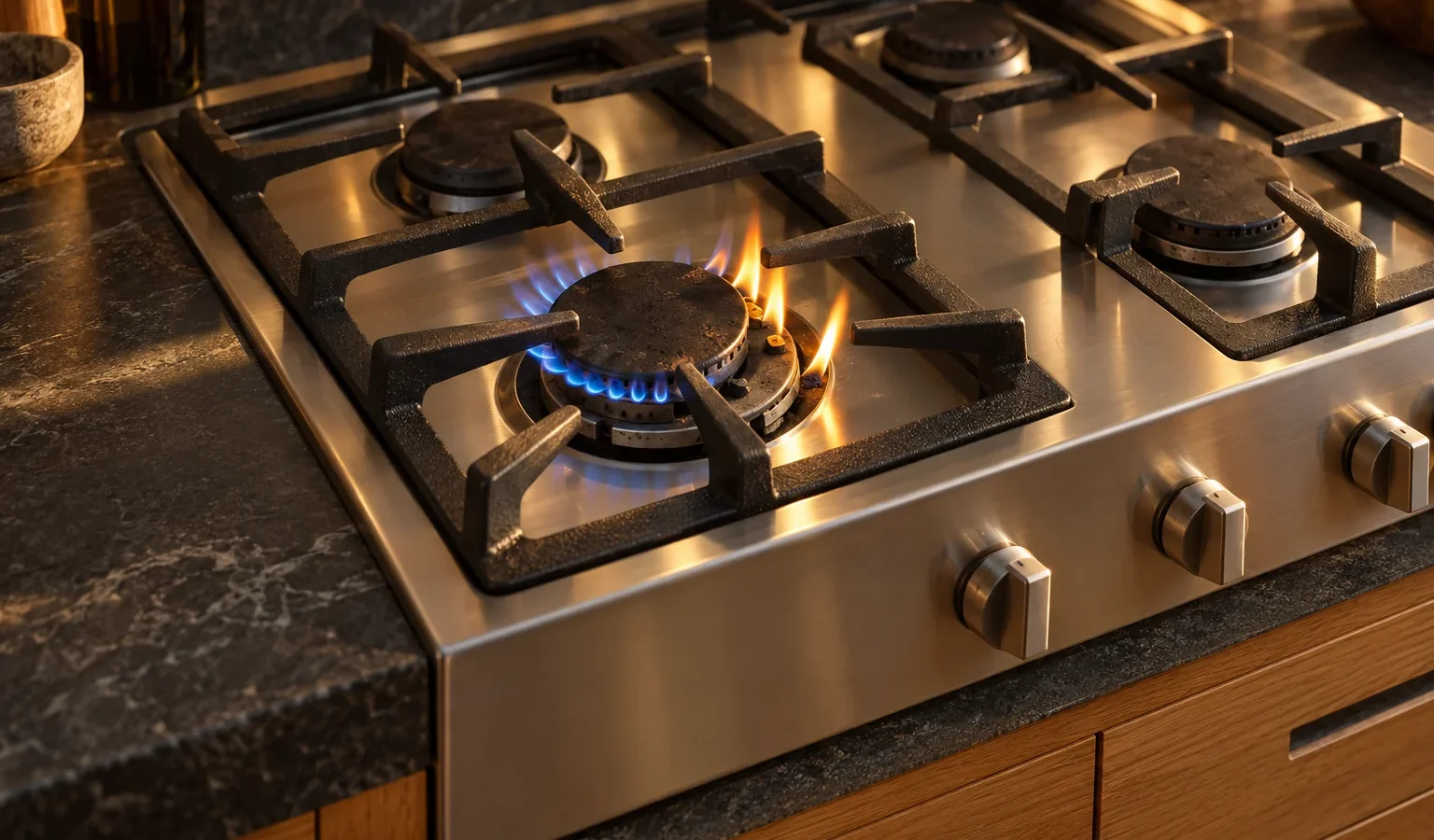
A healthy gas burner makes a ring of small, even flames that sit steadily around the cap. When part of the ring is missing, when flames lean to one side, or when you see yellow tips and hear a roar, something has changed. On a DCS cooktop or rangetop the change is frequently minor and fixable, but the same symptom can also point at a gas pressure or valve issue that no owner should touch. Here is how to work out which situation you are in.
Turn the burner to a medium setting and observe for a short time from a safe distance, with the vent on if you have one.
The most common cause is simple: grease, sugar, pasta water or cleaner dried inside the small ports that spread the flame. A cap that is dishwasher-cleaned or soaked and not dried completely can also leave water in the ports, and the burner sputters until it dries out.
Sealed burners rely on a cap that sits level on the base. After cleaning it is easy to set the cap down slightly crooked or swap parts between burners. The result is a flame that favors one side. Re-seat the cap gently and check it does not rock.
If one side lights late, the ignition electrode may be dirty or damp. That produces a delayed, puffing light that looks like an uneven flame at first.
Cooktops are set up for natural gas or propane, and the two need different orifices and pressure. A cooktop such as the CDV2-365-N is named as a natural gas model. When the fuel or conversion kit does not match the supply, flames look wrong across several burners at once. Low supply pressure or a partly closed shut-off valve also causes weak flames on every burner, not just one. A technician checks this with proper instruments; an owner should not open a gas fitting.
Older burner caps warp or crack from heat. Orifices can corrode. A cap with a visible crack or chip will not make an even ring no matter how often it is cleaned.
Professional gas cooktops depend on the cabinet around them. A cut-out that is tight, a hood that pulls hard, or a drafty window next to the cooktop can bend flames sideways. A strong makeup-air problem in a sealed modern home makes the flame flicker toward the hood. If the unevenness shows up only when the hood is running on high, note that for the visit. The lineup spans drop-in and rangetop styles, including the CT-365BL professional drop-in, the CDU-304 and CDU-365, and the CP-364GD; several of those are no longer sold new, which does not stop us from diagnosing them.
If you smell gas at any point, leave the room, avoid switches and flames, and call the gas utility or 911 from outside.
Book a visit if a clean, dry, correctly seated burner still burns unevenly, if several burners are affected, if you see yellow flames or soot, or if the ignition behaves differently than before. Give us the model number from the data label, which on cooktops is usually found under the burner box or on the frame; this model number guide explains where to look. We diagnose first, write up an estimate, and wait for your approval before repairing. Everything we handle on cooktops and rangetops is on DCS cooktop repair, and the lineup is in the DCS cooktops guide. If your problem is that the burner clicks without lighting, see range burner not igniting.
It signals incomplete combustion. Occasional orange flecks from a spill are normal; steady yellow tips are not. Turn the burner off, clean the cap, and book a visit if it returns.
Many people do, but trapped water is a frequent cause of patchy flames afterward. If you wash it, dry it thoroughly before refitting.
Often because it has been seated unevenly, or because a hood draft pulls on it. Check seating first, then notice whether the hood fan changes it.
If it was recently moved or converted, yes. A natural gas cooktop on propane, or the reverse, makes distinctive flames across the burners and needs a technician.
Closing the appliance shut-off valve is a reasonable habit if it is easy to reach. Never force a stiff valve.
Share a few details and we’ll confirm an appointment. Prefer to talk? Call us and we’ll help right away.