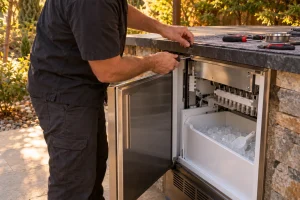
DCS Ice Maker All Indicators Flashing Error Code
When every light on a DCS RF15I ice maker display blinks nonstop, the board and the control panel have stopped communicating.

Specialized DCS Appliance Repair in San Francisco
Mon–Sat: 8:00 AM – 7:00 PM
A right-hinge outdoor ice maker that has gone slow or silent deserves a careful look at water, drain and airflow.

The RF15IR3 is the right-hinge version of the 15-inch outdoor ice maker, from the DCS outdoor refrigeration series and listed as current. Choosing the hinge side usually reflects where the unit sits, for example beside a wall that would block a door opening the other way.
Outdoor units collect pollen, dust, spider webs and grease haze at the intake, which warms the condenser and slows ice production. Water-side trouble shows up as small, ragged cubes or none at all. Electrical trouble, such as a tripped GFCI, makes the whole unit look dead.
DCS lists three display readouts for its RF15I outdoor ice maker: all indicators flashing (a communication error between the main board and the user interface), ICE flashing (a condenser temperature sensor problem, with no audible alarm) and OFF flashing (a bin sensor problem that puts the machine in the OFF state). Tell us what your RF15IR3 shows and in what pattern.
Write down the code or flashing indicator, then try one controlled reset after checking the outlet. Clear the grille. Stop if you see water running steadily from the base: close the supply valve and leave the rest to a technician. Never use a heater or a hair dryer to clear a frozen area.
Cloudy or soft cubes sometimes trace back to the water supply rather than the machine. Mineral buildup, a clogged inlet screen and a supply line that was moved during landscaping all change what reaches the unit. We look at the water before we blame the ice maker itself.
Look inside the cabinet wall or behind the kickplate. Compare with the left-hinge RF15IL3 and with the older RF15I. The full service outline sits on the DCS ice maker repair page, and the lineup on the ice makers guide. You may also find the ice maker troubleshooting article useful.
The door hinge. This one is right-hinge, the other left-hinge; both are 15-inch outdoor ice makers.
A dusty or blocked condenser area and warm surroundings both reduce ice making. Clearing the grille is a safe first step.
Stop using the unit and request a visit. Repeated tripping is a sign of an electrical or moisture problem.
Surface cleaning of the bin is fine when the unit is off. Leave panels and water connections to a technician.
A photo helps us arrive prepared.
Model-information disclaimer. Confirm your exact model number and specifications with your appliance documentation before booking a repair. Model pages are for identification and compatibility reference.
Repair for DCS outdoor ice makers in San Francisco and the Bay Area: no ice, slow ice, flashing lights and water line…
Share a few details and we’ll confirm an appointment. Prefer to talk? Call us and we’ll help right away.