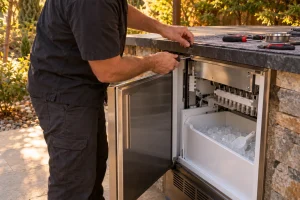
DCS Ice Maker Repair in the Bay Area
Repair for DCS outdoor ice makers in San Francisco and the Bay Area: no ice, slow ice, flashing lights and water line…

Specialized DCS Appliance Repair in San Francisco
Mon–Sat: 8:00 AM – 7:00 PM
A 15-inch outdoor ice maker is a small appliance with a long list of dependencies: water, drain, power and ambient air.
Nothing runs a bar cart like a steady supply of ice, and outdoor machines face dust, humidity and swings in air temperature that indoor models never see. Here is what to know about the DCS family, its indicators and the first things worth checking. Full visit details are at DCS ice maker repair.
The outdoor ice makers we handle are 15 inches wide. The RF15IL3 hinges on the left and the RF15IR3 on the right, and both are current. The earlier RF15I is no longer sold new, and the RF15IL2 is a left-hinge version of the same model. In a model number, the L or R at the end marks the hinge side, and the final digit separates revisions.
It is usually inside the cabinet on a side wall, and sometimes behind the kickplate. Open the door, shine a light along the inner wall, and photograph the plate with the serial number visible.
The RF15I reports faults by flashing its panel lights, and the pattern tells a technician where to start.
Complaints split into three families: no ice at all, ice that is small, cloudy or slow to arrive, and water pooling at the drain or under the cabinet. Our articles on an ice maker that is not working and an ice machine not making ice explain how those symptoms are sorted. Outdoor placement adds its own causes. Hot afternoons on a roof terrace make the machine work harder, dust and pollen collect on the condenser, and a supply line exposed to temperature swings can kink or stiffen.
Do not open the cabinet back or handle sealed refrigeration parts. If water runs onto electrical outlets, turn off the breaker.
Describe the symptom and share the model photo. We diagnose first, give a written estimate and wait for your approval. For the broader category, see the refrigerator guide.
An outdoor ice maker needs a water supply, usually a drain path and a grounded outlet that is protected from the weather. A line that was pinched during a cabinet install, a drain that runs uphill or an outlet shared with other equipment can mimic a failed part. Placement matters too: an enclosure that traps warm air makes the machine work harder, and a tight cut-out may leave the condenser starved. Tell us about any recent remodel, because moving the cabinet or replacing a countertop is a common starting point for new problems.
Turn the machine off if water is leaking toward an outlet, if you hear grinding or a loud buzz, or if a burning smell appears. A dripping line you can see should be reported, not tightened or taped.
On the RF15I it is a system sensor error tied to the condenser temperature sensor. The machine keeps running but does not adjust to ambient conditions, so have it checked.
A failed bin sensor puts the machine into an OFF state. It makes no sound, so many owners notice only when the ice stops.
That depends on the installation. A technician will trace the drain and supply paths during the visit if there is a leak or a standing water complaint.
The RF15I is no longer sold new. Service is still available, and newer RF15IL3 and RF15IR3 models are current.
Turn the power off at the switch or outlet once, wait a short moment, and switch it back on. Do not repeat it over and over; write down the pattern instead.
Repair for DCS outdoor ice makers in San Francisco and the Bay Area: no ice, slow ice, flashing lights and water line…
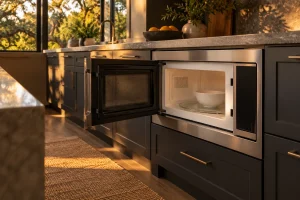
Guide to DCS built-in and convection microwaves in the Bay Area: the CMO24SS and CMOH-30SS, no-heat and sensor complaints, safe checks and…
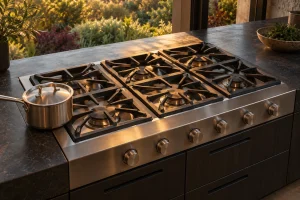
Guide to DCS gas cooktops and rangetops in the Bay Area: the CT, CDU, CDV2 and CP models, common burner complaints, safe…
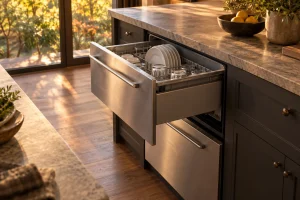
Guide to DCS DishDrawer dishwashers in the Bay Area: single and double drawer models, F and U codes, leaks, draining trouble and…
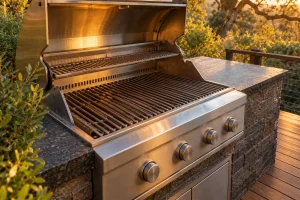
Built-in and freestanding DCS grills in Series 7 and Series 9: how to read the lineup, where the model label sits, and…
Share a few details and we’ll confirm an appointment. Prefer to talk? Call us and we’ll help right away.